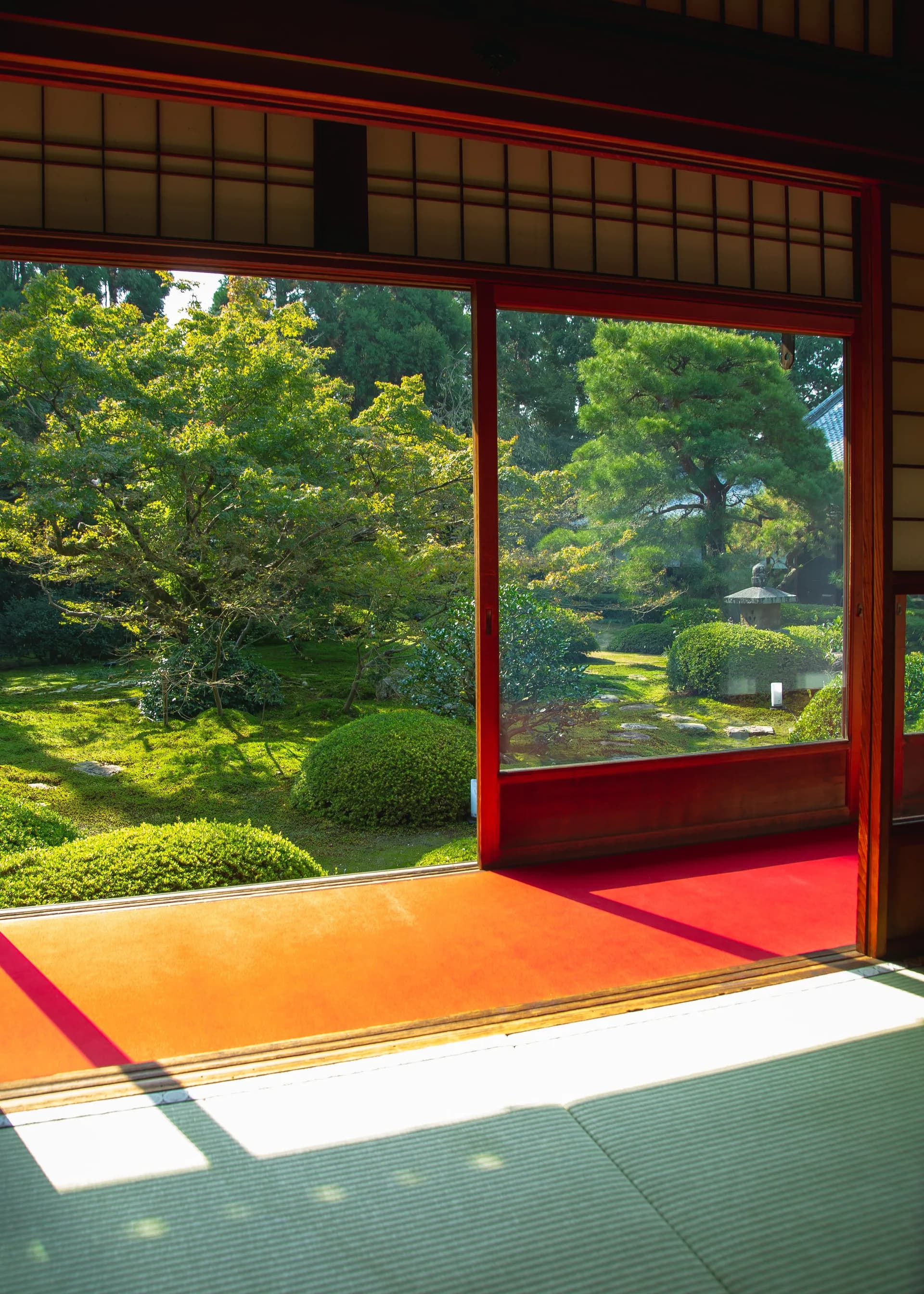


A ryokan is not a generic promise
Many travelers associate a ryokan with Japanese hospitality, tatami mats, and special meals. However, these establishments vary significantly. Some have futons, others have extra beds; some offer shared baths, while others provide private facilities. Therefore, make it clear right from the start exactly which rooms and services your ryokan actually offers. A generic image of a ryokan should not be used in place of a description of your own property.
Then describe what makes a stay with you unique. Is it a small house with a personal welcome, a place for a quiet night on a longer trip, or a stay with meal times arranged together? Stick to specific observations. Guests will find this more helpful than general statements about the “only correct” or “particularly authentic” way of living in Japan.
Meals often set the rhythm of the day
A carefully prepared dinner requires planning on both sides. Therefore, specify early on whether meals are included in the stay and during what time frame they will take place. Also explain where meals will be served: in the guest’s own room, in a common area, or at another location. Guests can then plan their arrival so that neither they nor your kitchen are put under avoidable time pressure.
Use images and descriptions that match the food you actually serve. An elaborate menu is not a standard feature of every ryokan. When it comes to allergies and dietary preferences, timely, specific communication is more helpful than a blanket promise. Clearly state which accommodations you can make and which you cannot. Even an overnight stay without meals deserves a clear description to avoid any unspoken expectations.
Clearly distinguish between different types of baths and their uses
A private bathroom, a shared bathroom, and a bathroom that can be used privately at certain times are different options. Describe these differences in simple terms. What amenities are inside the room, and which are outside? Are there specific usage times or do guests need to make prior arrangements? Take photos of the accessible areas so that guests can understand the layout without showing other people or private areas.
Only refer to a bath as an “onsen” if this actually applies to your property. The accommodation type does not imply a hot spring or a specific bathing facility. Explain your own house rules in a friendly manner and in a timely fashion—for example, regarding washing before bathing or the use of shared spaces. Do not generalize them into rules that supposedly apply the same way in every Japanese home.
- List private bathrooms and shared facilities separately.
- Describe times and necessary arrangements clearly.
- Show any special access points or steps in the photos.
- Advertise only swimming areas that are actually available.
Help guests arrive without any uncertainty
For international guests, even the entrance can feel unfamiliar. A brief explanation of where to take off shoes and where to put luggage is more welcoming than a long list of rules. If you provide slippers or clothing for use inside the house, describe their purpose. Don’t assume these things are standard just because other ryokans offer them or travel guides mention them.
Also, provide a realistic arrival time and clear directions. A nearby train station doesn’t automatically mean the walk with heavy luggage is easy. Describe any inclines or stairs if they’re part of the route. If guests arrive late, they should know how to contact you and which previously agreed-upon arrangements might be affected as a result.
Describe the sense of closeness and seclusion within the house
Show where guests can have privacy and where interactions take place. A sliding door in the picture doesn’t say anything about soundproofing or whether it can be locked. Describe the actual room boundaries and shared common areas. If noise from adjacent rooms is audible, providing factual information is more helpful than promising complete silence. The times when common areas are shared are also part of the picture of your property.
Choose photos that convey an authentic sense of space. A close-up of tatami mats or tableware can complement a full view, but should not replace it. Show light sources, windows, and available heating or cooling. If there are multiple room types, each description should correspond to the appropriate images. This helps guests understand which room they are viewing and which features are only available in another part of the property.
Clear explanations make for a personalized listing
Read your draft from the perspective of someone who has never stayed in a ryokan before. Can they visualize their first night there without having to look up any additional terms? Briefly explain unfamiliar terms in everyday language. This doesn’t detract from your ryokan’s character. Rather, it shows that you welcome people who are just getting to know your routines and want to understand them respectfully.
If the rooms, meals, and amenities are clearly described, you can list your ryokan for free on BookNoFees. The host area is the general starting point for your accommodation. Before listing availability, clarify the requirements for operating your business at that location. In your listing, promise only what is actually available during those specific stays, even if additional options exist seasonally.
Frequently Asked Questions
Does a ryokan have to offer futons instead of beds?
Describe the actual sleeping arrangements available at your property. Travelers should be able to tell whether they’ll be sleeping on futons on the floor, in beds, or in rooms with varying amenities. Photos showing the rooms set up for the night help convey this. Specific amenities should not be assumed solely based on the term “Ryokan.”
Does a ryokan automatically include an onsen?
No, the name of the accommodation should not imply a hot spring. Explain your actual bathing facilities and use the term “onsen” only if it applies. The description should also explicitly state whether the bath is for private use, shared use, or available by appointment.
How do I explain fixed meal times without sounding strict?
Describe the logistics involved and ask guests to plan their arrival accordingly. Specify specific time windows and a way to coordinate in advance. This is clearer than simply prohibiting late arrivals and helps guests plan their trip or day trip effectively.
What information do guests without Ryokan experience need?
Information about sleeping arrangements, bathroom use, meals, and arrival at the property is particularly helpful. Explain unfamiliar terms with a short sentence. Your actual procedures are more important than a general cultural guide, which may not even apply to your property and how it’s currently operated.
Can I list my ryokan for free?
Yes, you can list it for free in the host area of BookNoFees. Use current photos and a description that clearly highlights the rooms and services offered. This page will help you get started; the process for creating a listing is the same general procedure as for other hosts.